
What to Wear for Figure Skating: A Complete Guide for Training and Performance
Choosing the right figure skating clothing plays a huge role in how comfortable and confident you feel on the ice. Ice rinks are cold, but skating itself is physically demanding, so wearing the wrong kit can leave you either freezing or overheating. The key is understanding how to dress for figure skating training, practice, and competitions. Instead of bulky layers, figure skating works best with thin, technical fabrics that trap warmth, wick moisture away from the body, and allow full freedom of movement. This approach keeps skaters comfortable throughout a session, from warm-up to cool-down.
Why Fit Matters in Figure Skating Clothing
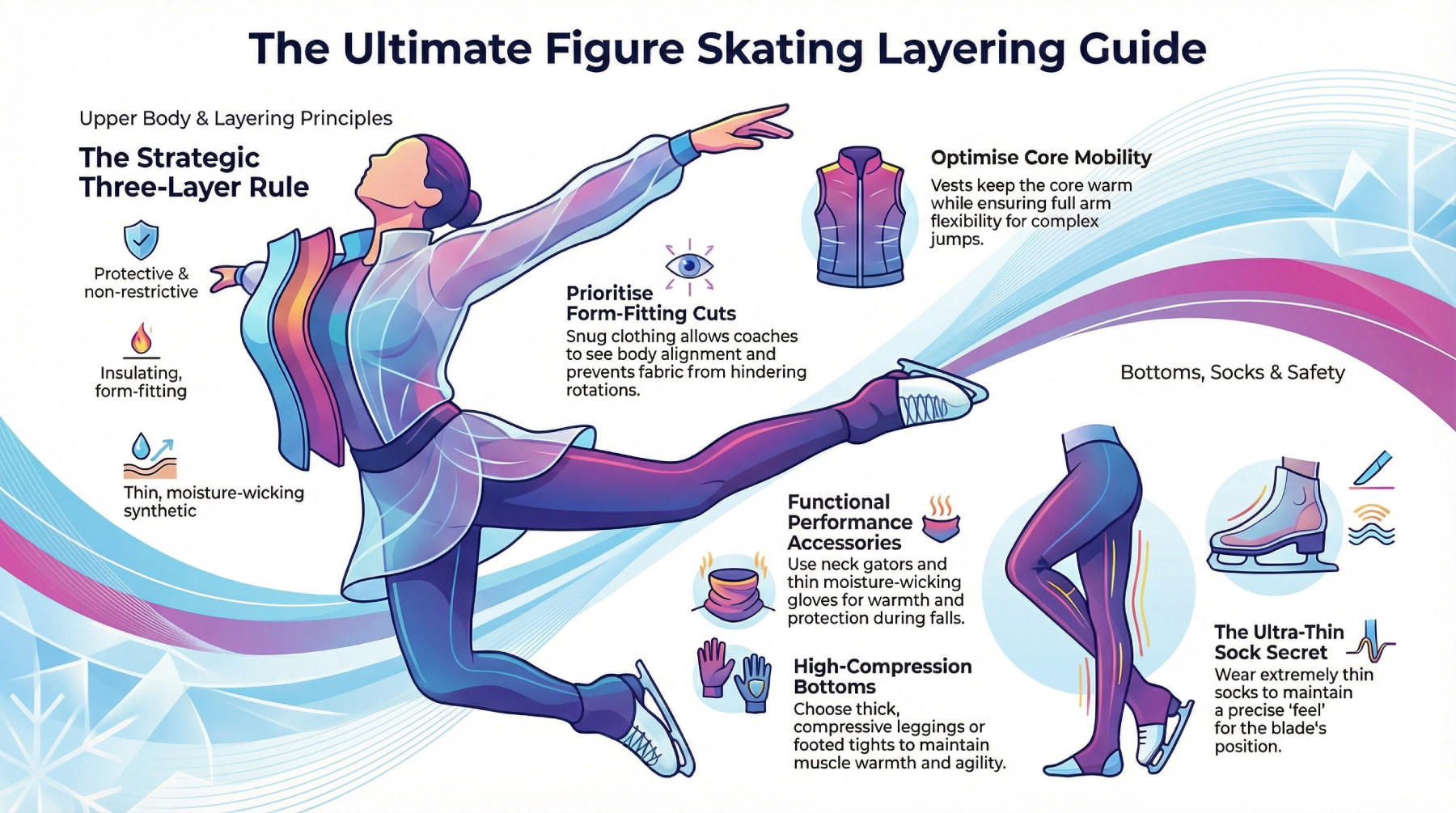
Fit is one of the most important considerations when selecting figure skating apparel. Skating relies on balance, rotation, and precise body positioning, and loose or baggy clothing can interfere with all three. Excess fabric can create drag during spins, make jumps harder to control, and move unpredictably while skating. A close, streamlined fit allows coaches to clearly see knee bend, hip alignment, posture, and overall body lines, which is essential for improving technique. This is why fitted figure skating leggings, tops, and jackets are standard for both training and competitive skating.
Layering the Upper Body for Warmth and Flexibility
When it comes to upper body layers, start with a fitted base layer made from moisture-wicking synthetic fabrics rather than cotton, which traps sweat and becomes cold. Many skaters prefer tops with built-in support, which reduce bulk and make layering easier. Over this, thin thermal mid-layers provide the majority of warmth while allowing full movement. For the outer layer, fitted zip-up jackets or skating vests are ideal. Vests are particularly popular because they keep the core warm while leaving arms free for jumps and spins. Wind-resistant fabrics also help block cold air during fast skating.
Choosing the Right Lower Body Clothing
For the lower body, high-waisted, compressive figure skating leggings are the most practical choice. They provide warmth without bulk, support muscles during training, and maintain clean lines so coaches can see technique clearly. Skaters who train or perform in skirts or dresses should wear proper skating tights or integrated shorts underneath for coverage, warmth, and confidence. Skating tights are designed specifically for ice conditions and come in footed, footless, and over-the-boot styles. The choice largely depends on personal preference, style, and comfort.
Essential Accessories for Figure Skating
Accessories may seem like minor details, but they make a noticeable difference on the ice. Ultra-thin socks are essential for blade feel, as thick socks reduce precision in spins, edges, and footwork. Gloves protect hands from the cold and from impact during falls, with synthetic materials preferred for their lightweight, quick-drying properties. Neck gaiters are safer than scarves, as they won’t unravel or interfere with jumps and spins. Hats are usually unnecessary for indoor rinks and can easily fall off during practice.
Off-Ice Training Gear and Footwear
Off-ice training is just as important as on-ice practice, and the right footwear is essential for safety and performance. Trainers should provide strong ankle support and stability for jumps, running, and plyometric exercises. Overly flexible or worn-out shoes increase the risk of injury, so replacing off-ice shoes regularly is important to maintain support and protection. High-quality off-ice training footwear ensures skaters can train confidently while reducing the risk of sprains and strains.
Final Thoughts: How to Dress for Comfort and Performance
The right figure skating clothing helps skaters stay warm without overheating, move freely, and focus on improving technique. By choosing well-fitting layers, skating-specific fabrics, and the right accessories, you can make a real difference to comfort, safety, and performance on the ice. At SkateHut, we stock a wide range of figure skating clothing, tights, accessories, and off-ice training gear designed specifically for rink conditions, whether you’re just starting out or training regularly. If you’re ever unsure what to choose, our team is always happy to help you find the right kit.