

Roll With It: Men's Mental Health and the Power of Skateboarding
There's an unwritten rule a lot of men grow up with: keep it together. Don't show weakness. Sort it out yourself. For generations, that rule has done a quiet but devastating amount of damage and the numbers back that up.
Men's mental health is in crisis. Not because men are inherently more troubled than women, but because the systems, stigmas and cultural expectations around masculinity have made it far harder for men to ask for help, talk openly, or even recognise when something's wrong.
This Men's Mental Health Awareness Month, we want to break that cycle. And we want to show why skateboarding, and outdoor action sports more broadly, has a genuinely powerful role to play.
The Reality: Men Are Struggling in Silence
The statistics are stark.
Suicide is the leading cause of death for men under the age of 50 in the UK. The male suicide rate in 2024 stood at 17.6 per 100,000 - approximately three times the female rate of 5.7 per 100,000. Men account for approximately 75% of all suicide deaths in the UK, a pattern that has remained consistent since the mid-1990s.
So why aren't men getting help? Perceived stigma is cited by 22% of men as the biggest barrier to accessing mental health care. Only 36% of NHS Talking Therapies referrals are for men, despite their substantial mental health needs.
That gap between need and help-seeking is the real problem. Despite experiencing mental health difficulties at similar rates to women, men are significantly less likely to access psychological therapies.
The knock-on effects show up in other ways too. Men are more likely to employ harmful coping strategies, including excessive alcohol consumption and substance misuse. Rather than processing difficult emotions, many men reach for a drink, bury themselves in work, or simply go quiet.
One in five adults in England are currently living with a common mental health problem, with rates sitting at 15.4% among men. And while that figure is lower than for women on paper, it almost certainly underrepresents the true picture, because men are far less likely to self-report or seek a diagnosis in the first place.
Why Men Find It So Hard to Open Up
Understanding why men struggle to talk about mental health is just as important as knowing the numbers.
A lot of it comes down to identity. Many men, particularly older generations, but younger men too, have internalised the idea that vulnerability is weakness. That needing support means failing at "being a man." Therapy, emotional honesty, or even admitting to a bad week can feel like a betrayal of an identity built around self-reliance.
Work plays a huge role as well. Cultural barriers to help-seeking are particularly acute in construction, agriculture, and the armed forces, sectors where toughness is part of the professional identity. Construction workers experience suicide rates 3.7 times higher than the general population.
Then there's the systemic side. Mental health services have historically been designed in ways that work better for women, talking therapy, for instance, suits a communication style that many men haven't been encouraged to develop. Men often need a different way in.
That's where activity-based approaches, and specifically skateboarding, come into their own.

Skateboarding and Mental Health: The Research
It might sound like we're biased here (we are, a little), but the science genuinely supports it: skateboarding is good for your mental health.
A study conducted by Instinct Laboratory and Flo Skatepark found a striking correlation between skateboarding and improved mental health. It showed that involvement in the sport can reduce stress, increase confidence and provide a sense of escapism. Participants reported skating to reduce boredom, cope with emotions, and build the kind of quiet, sustained confidence that comes from mastering something genuinely difficult.
A major study from the University of California — funded by the Tony Hawk Foundation — found that skateboarding improves mental health, fosters community, and promotes resilience. Focusing on 13 to 25-year-olds, respondents reported that skateboarding helps to alleviate stress.
There's something uniquely powerful about the way skating creates what researchers call a state of "flow", total absorption in the present moment. The concentration and immersion needed for skateboarding gives participants a sense of wellbeing and calm. When you're trying to land a trick, your brain simply doesn't have the bandwidth to spiral.
And the social dimension matters enormously. Research from the University of Southern California found that through skateboarding, skaters develop the ability to communicate and build relationships with people from diverse backgrounds. Skaters are excellent critical thinkers and problem-solvers who view success from a more communal perspective.
For men who struggle to open up in traditional "talking" environments, the skatepark offers something different: a place to just be with other people, side by side, without the pressure of direct emotional conversation. That matters. Connection doesn't always have to be verbal.
The Benefits of Getting Outside
Skateboarding is, at its heart, an outdoor sport, and that brings an extra layer of mental health benefit.
Research consistently shows that people who exercise regularly have better mental health and emotional wellbeing, and lower rates of mental illness. For mild to moderate depression, physical activity can be as effective as antidepressants or psychological treatments like cognitive behavioural therapy.
But exercising outdoors specifically adds something more. People report higher levels of vitality, enthusiasm, pleasure and self-esteem, and lower levels of tension, depression and fatigue after exercising outside compared to indoors. People who exercise outdoors also do it more often and for longer.
A 2022 systematic review and meta-analysis published in Applied Psychology: Health and Well-Being compared the psychological effects of physical activity in natural outdoor environments versus urban outdoor environments, and found large or moderate effects in favour of the natural environment for anxiety, fatigue, positive affect and vigour.
Research into men's physical activity and mental health specifically highlights the important role of leisure-time physical activity involving social interactions for men with lower mental wellbeing. Skateboarding ticks every one of those boxes.
Skaters Who Are Speaking Up
Some of the most prominent figures in skateboarding have been refreshingly honest about their own mental health struggles — and that openness matters more than it might seem. When a hero talks about hardship, it gives others permission to do the same.
Tony Hawk
The man who arguably made skateboarding a global phenomenon has been vocal about the pressure athletes face and the mental health challenges that go unspoken in the sport. In an interview about skateboarding's evolving culture, Hawk reflected on his peers: "A lot of my peers suffered. I feel like skateboarding itself can be so beneficial to your mental health because it'll teach you so much about what you're capable of and finding your own path." He also called for better mental health support across the sport, saying: "As much as I respect the privacy of families, I think it's a disservice to not bring that to light so people understand that hey, everyone is struggling."
Hawk has used his platform to actively raise awareness, including using a Kurt Cobain-painted skateboard to fundraise for mental health resources and skatepark projects, saying he hoped "to make something good of this acquisition by raising awareness for emotional health, and to help provide resources for those who are struggling mentally."
His foundation — now known as The Skatepark Project — promotes and funds high-quality public skateparks in low-income areas throughout the United States, with the explicit aim of promoting healthy, active lifestyles and enriching the lives of youth through skateboarding. The social infrastructure of the skatepark is itself a mental health intervention.
Ryan Sheckler
Few skaters have been as publicly honest about their personal battles as Ryan Sheckler. A professional since the age of 13 and the star of MTV's Life of Ryan, Sheckler has spoken openly about the toll of early fame and the drinking habit he developed as his competitive career wound down. In 2016, Sheckler entered rehab to treat his alcohol addiction. During the recovery process, he found his faith and became a born-again Christian, describing the process as "a chance to grow spiritually, mentally, and physically."
After around 18 months of sobriety, Sheckler described feeling better physically and mentally than he ever had, and skating better too. "I get into my park and I'll start skating, then I'll look at the clock and three hours have passed. My body is ready for anything. Not just skateboarding, just life in general. Whatever gets thrown at me, I'm ready for."
His story resonates not because it's neat or triumphant, but because it's honest. He struggled, he asked for help, from his mum, from his community — and he came through it. He also started The Sheckler Foundation with his mother to "be the change" for children and injured action sports athletes.
Nyjah Huston
One of the most decorated street skaters on the planet, Nyjah Huston has been candid about the psychological weight of elite competition. Heading into the 2024 Paris Olympics, Huston reflected on a shift in his mindset: "I've always been so competitive. Like if I didn't do good in a contest I would be really bummed on myself and take it really hard." His openness about that pressure, and the work he did to change his relationship with performance — speaks to something many men will recognise: the cost of tying your entire self-worth to results.
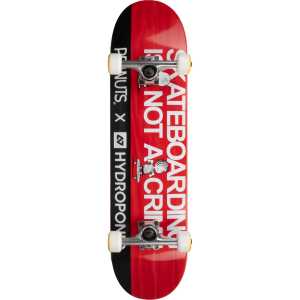
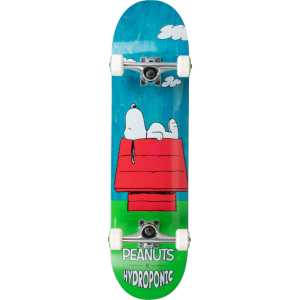
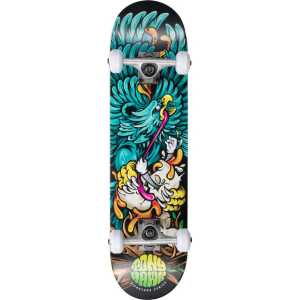
LATEST COMPLETE SKATEBOARDS





What This All Means
Men don't need to be fixed. They need better on-ramps to support — and for many, skateboarding is exactly that.
It's a sport built on community without judgement. A space where failure is expected, repetition is respected, and progress is deeply personal. Where you're not measured against anyone else's standards, only your own last attempt. And where showing up, even on a bad day, even just to roll around, is enough.
Skating releases dopamine, oxytocin, serotonin and endorphins in the brain. It keeps people active and reduces time spent on devices linked to anxiety, depression, isolation and low self-esteem.
If you're struggling, or you know someone who is, know that there are people who want to help:
-
Samaritans: Call 116 123 (free, 24/7)
-
CALM (Campaign Against Living Miserably): Call 0800 58 58 58 or visit thecalmzone.net
-
Mind: Visit mind.org.uk
And if you're not ready for any of that yet, get on a board. You'd be surprised what a session can do.