

The Anatomy Of A Roller Skate - Every Part of Your Roller Skate Explained
If you've ever stared at a product page wondering what on earth a "kingpin" or a "durometer" is, you're not alone. A roller skate might look like one simple object, but it's actually a stack of individual parts, each one quietly doing its own job. Change one part and you change how the whole skate feels underfoot.
In this guide, we're breaking a quad skate down into its core components: boot, liner, plate, trucks, cushions, wheels, bearings, axle & hardware and toe stops, explaining what each one actually does, and pointing you towards the right options depending on your skating style and the surface you're rolling on, indoor or outdoor.
How a Skate Fits Together
Think of a skate as a stack, built from the ground up:
-
Boot – holds and supports your foot
-
Liner – the inner padding that cushions your foot inside the boot
-
Plate – the chassis that bolts the boot to everything below
-
Trucks – the pivoting mechanism that lets you turn
-
Cushions (bushings) – control how easily the trucks turn
-
Wheels – what actually rolls
-
Bearings – sit inside the wheels and let them spin
-
Axle & nuts/bolts – the hardware that holds the whole setup together
-
Toe stops – how you brake and balance
Each part affects the others. A soft boot with hard wheels feels completely different to a stiff boot with soft wheels, even though only one component changed. Once you understand what each part is doing, choosing (or upgrading) skates becomes far less overwhelming.
The Boot
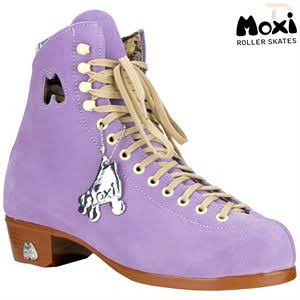
The boot is your direct connection to the skate, so it has the biggest single impact on comfort, support and control.
Material
-
Vinyl/synthetic boots are cheaper and lighter to produce, making them ideal for beginners or occasional skaters. They're less durable and offer less structural support over time.
-
Leather or reinforced composite boots cost more but mould to your foot, breathe better and hold their shape under harder use — the standard choice once you're skating regularly or pushing your ability.
Height
-
Low-cut boots free up ankle mobility, which is why they're common in derby and jam skating, where quick footwork matters.
-
High-cut boots lock the ankle in place for extra support, which is why they dominate rink and artistic skating, where control and stability during spins and footwork are the priority.
Stiffness
-
Soft/flexible boots are forgiving and comfortable, suited to casual, social or beginner skating.
-
Rigid boots transfer more energy into every movement, giving you the control needed for fast turns, jumps and tricks — at the cost of some comfort until they're broken in.
How boots vary by style
-
Artistic/rink skating: high-cut, supportive boots for clean lines and controlled footwork
-
Street/park skating: lower, more flexible boots (sometimes with reinforced toe caps) for mobility and grinding
-
Indoor skating: lighter boots optimised for smooth, predictable rink floors
-
Outdoor skating: sturdier boots that can handle knocks, moisture and uneven ground
What to buy
For beginners heading indoors, a supportive high-top like the Rookie or Impala ranges gives ankle confidence while you find your balance. If you're heading outdoors or want a boot that'll grow with you, a Rio Roller or SFR boot strikes a good balance of comfort and durability. Once you're competing or training seriously, look at derby-focused boots such as Moxi, Antik, Chaya, Riedell or Bont Vaypor — these offer the reinforced construction and precise fit that advanced skaters need.
The Liner
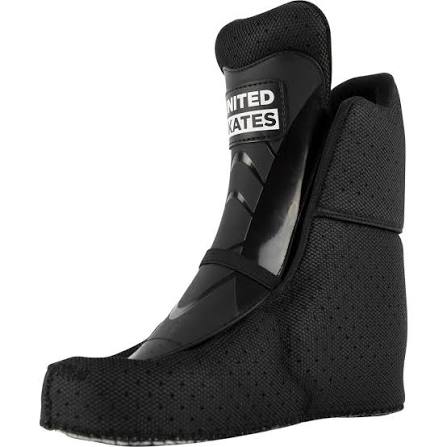
Sitting inside the boot,or often built into the boot itself, the liner is the padded "inner slipper" between your foot and the hard shell of the skate. It's easy to overlook, but it has a huge say in comfort, fit and how quickly a new pair of skates breaks in.
Padding thickness
-
Thicker, more padded liners are more comfortable straight out of the box and protect your foot from the boot's hard components — great for beginners and longer sessions, though they take a little longer to break in and can make the skate feel slightly less precise.
-
Thinner liners are more responsive and let you feel the boot more directly, which experienced skaters often prefer for tighter control, though they offer less cushioning during long sessions.
Heat-mouldable liners are designed to be gently warmed and moulded to the exact shape of your foot, which speeds up the break-in period and can iron out pressure points that a stock liner leaves behind — a worthwhile option if you have wider or narrower feet than standard.
When to replace a liner Liners compress and wear out with use long before the boot shell does. If your once-snug skates suddenly feel loose, sloppy, or you're getting new pressure points, a tired liner is often the cause — and it's far cheaper to replace the liner than the whole boot.
What to buy
Most Skatehut skates, including the Rio Roller and Rookie ranges, come with soft, padded liners built in for comfort out of the box. If your liners have gone flat or you're refreshing an older boot, replacement liners such as the United Skates VX4 liners are designed to simply slip into your existing boot shell (they also fit similar moulded skates like Ventro Turbo, Roces and SFR Raptor) — an easy, affordable way to make old skates feel new again.
The Plate
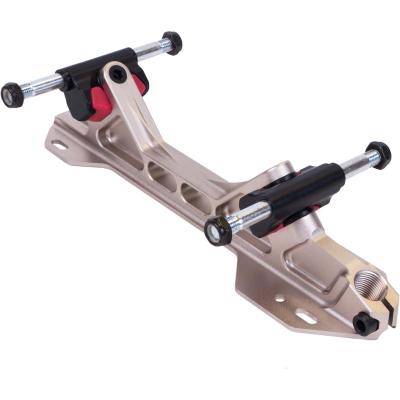
The plate is the chassis that bolts your boot to your trucks and wheels — essentially the skate's backbone.
Plastic (nylon) plates are lighter on your wallet and flex slightly, which absorbs some shock. They're a great entry point for beginners and casual skaters who don't need maximum power transfer.
Aluminium plates are stiffer and far more durable. Because they don't flex, more of your energy goes directly into the wheels rather than being absorbed by the plate — better for advanced skaters, jumps, and outdoor skating where a stronger chassis holds up to rougher terrain.
For beginners and indoor cruising, a nylon plate (standard on most entry-level Rio Roller and Rookie skates) is more than enough. If you're progressing to tricks, jumps or regular outdoor use, upgrading to an aluminium plate is one of the most noticeable performance boosts you
Trucks
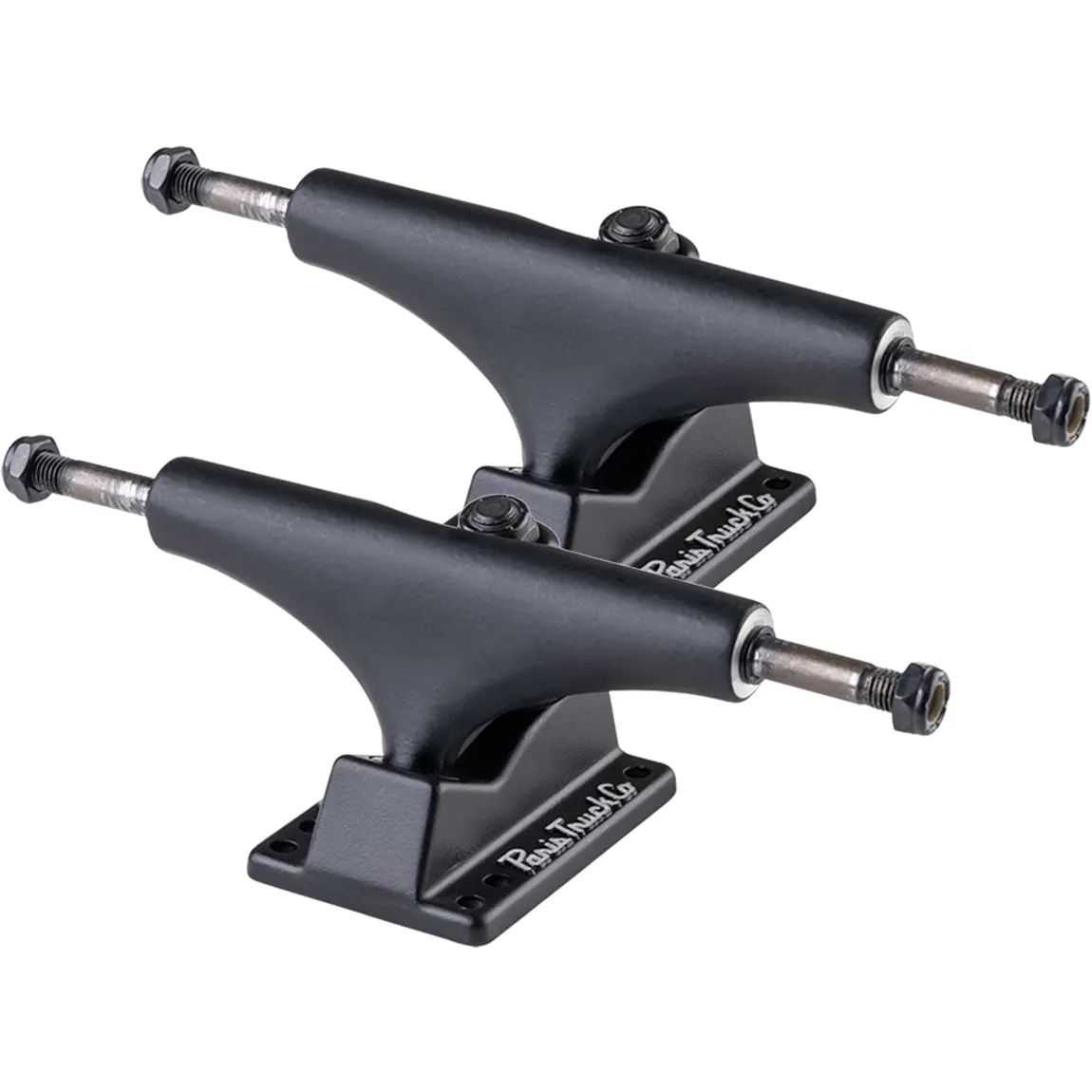
Each skate has two independent trucks — one front, one rear — and each truck holds a kingpin: the central bolt that the truck pivots around when you lean and turn. Tighten or loosen the kingpin nut and you directly change how easily the truck turns.
Kingpin angle is the angle at which the truck sits relative to the plate, and it's one of the biggest factors in how a skate turns:
-
Steeper angles (around 45°) turn more easily with less effort — great for artistic and jam skating, where tight, responsive turns matter.
-
Shallower angles (around 32–40°) are more stable at speed and resist over-turning — better for derby or outdoor cruising, where you want predictability over sharp agility.
Some trucks are reversible or adjustable, meaning you can flip or tune the truck to change the kingpin angle without buying a new set — useful if you're still working out which turning feel suits you.
Cushions
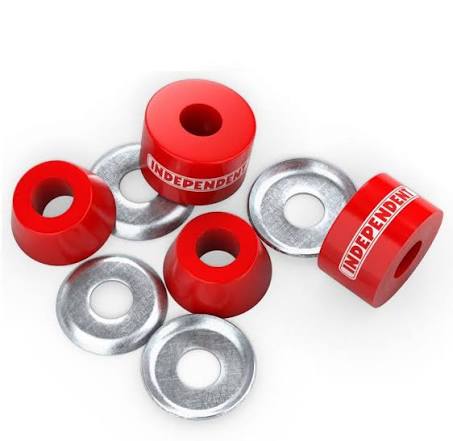
Cushions sit around the kingpin inside each truck, and they're what actually controls how the truck resists or allows turning. Small part, huge effect on feel.
-
Soft cushions give a loose, responsive turn — ideal for tight manoeuvres, dance skating and jam skating.
-
Hard cushions resist turning and stay stable — better for speed skating and outdoor cruising, where you don't want the skate darting side to side.
Shape matters too. Barrel-shaped cushions compress evenly and give a smoother, more linear turn response. Cone-shaped cushions ramp up resistance more sharply the further you lean, giving a snappier, more aggressive turn feel. Many skaters run a barrel on one side of the truck and a cone on the other to blend the two characteristics.
If your skates feel too twitchy or too stiff to turn, cushions are usually the cheapest and easiest fix — before you assume you need new trucks entirely.
Wheels
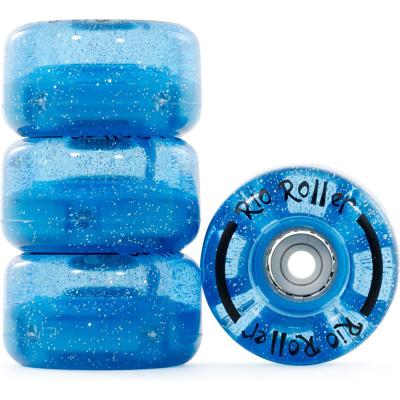
Wheels are where "indoor vs outdoor" and "style vs style" differences show up the most.
Diameter
-
54–59mm: tighter, more agile turns — the go-to size for derby, jam and artistic skating.
-
62–65mm+: better rolling speed and momentum over rougher ground — the choice for outdoor skating and cruising.
Durometer (hardness)
-
78A–85A (soft): better grip and shock absorption on rough or outdoor surfaces, where you want the wheel to soak up debris and cracks rather than bounce off them.
-
88A–101A (hard): faster and more efficient on smooth indoor rinks, where grip matters less than glide.
Shape
-
Flatter profile wheels put more urethane in contact with the ground, giving more grip and control — favoured in artistic and rhythm skating.
-
Rounder profile wheels make it easier to lean into turns and transition your weight — common in derby and street skating.
Width also plays a role: wider wheels are common on quads because they add side-to-side stability, which is especially useful for beginners and jam skaters doing quick lateral footwork.
What to buy
For indoor rinks and artistic skating, look at Sonar (by Radar) indoor recreational and rhythm wheels — hard, grippy and smooth on polished floors. For outdoor cruising, Radar Energy wheels use a softer outdoor-specific urethane that glides over debris and rough tarmac. Derby and jam skaters should look at purpose-built options like the Radar Halo, which balances grip and response for fast direction changes. If you're just starting out and want something fun and colourful, Rio Roller and LMNADE wheel packs (including light-up options) are a popular, affordable place to begin.
Bearings
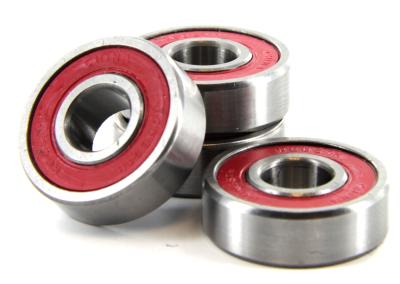
Bearings sit inside each wheel and let it spin freely around the axle — arguably the single most underrated upgrade on any skate.
-
Steel bearings are affordable, reliable, and the standard fit on most skates. They're a perfectly good starting point.
-
Ceramic bearings are lighter, spin more smoothly, and resist rust — but come at a higher price point, generally worth it once you're skating often enough to feel the difference.
Bearings are rated using the ABEC scale (or a manufacturer's own rating system), which measures manufacturing precision — broadly, the higher the number, the more precise the bearing. ABEC-5 or ABEC-7 tends to offer the best balance of performance and durability for everyday skating, while ABEC-9 pushes toward speed and precision at a higher cost.
If your skates feel sluggish, gritty, or like they're not rolling as freely as they used to, bearings are very often the culprit — and swapping them is usually the first upgrade worth making before you spend money elsewhere. Skatehut stocks everything from budget-friendly steel packs up to premium Riedell and MOTO bearings for skaters wanting a noticeable step up in smoothness.
Axle & Nuts/Bolts
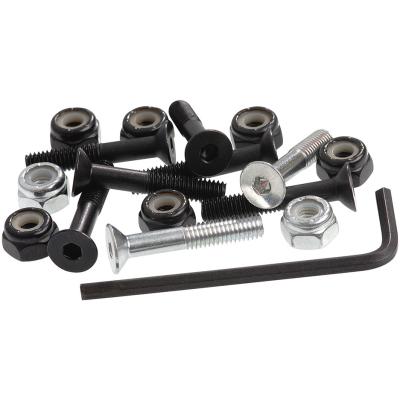
It's the least glamorous part of the skate, but the axle and hardware are what physically hold your wheels, bearings and trucks together — and loose or worn hardware can undo the benefit of every other upgrade you make.
The axle is the rod that runs through the centre of each wheel, passing through the bearings on either side, and bolts into the truck's hanger. Axles need to match your bearing size (most quad skates use standard 8mm bearings), and a bent or damaged axle will cause a wheel to wobble no matter how good your bearings are.
Axle nuts sit on the end of the axle and hold the wheel firmly in place. They need to be tight enough that the wheel can't work loose, but not so tight that they compress the bearings and stop the wheel spinning freely — a common mistake that makes a perfectly good wheel feel sluggish.
Kingpin nuts are a separate piece of hardware that tighten down onto the truck's kingpin, controlling how compressed your cushions are. Loosening this nut gives a looser, more responsive turn; tightening it firms things up — it's the quickest on-the-fly adjustment you can make to how a skate turns.
Other hardware — the mounting bolts that secure the plate to the boot, washers, spacers and lock nuts — all wear over time. Threads can strip, bolts can rust (especially after outdoor or wet-weather skating), and washers can crack. None of this hardware is expensive, but it's worth checking periodically, since a single loose or failing bolt can affect the whole setup.
What to buy
Skatehut stocks replacement axle nuts, kingpin nuts and general hardware kits so you're not stuck if something strips or goes missing — handy to keep a spare set in your skate bag, particularly if you skate outdoors regularly where hardware is exposed to grit and moisture. If you're building or maintaining a setup yourself, a basic skate tool that covers axle nuts, kingpin nuts and mounting bolts in one is a worthwhile companion purchase.
Toe stops
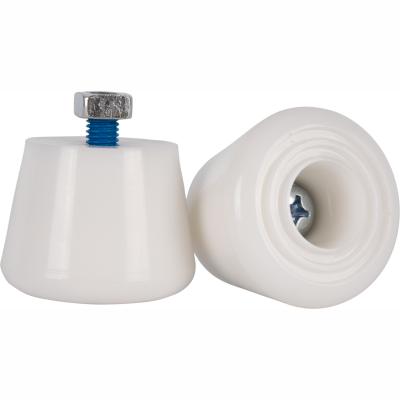
The toe stop sits at the front of the plate and is your main tool for braking, balancing and pushing off.
-
Small, round nub stops create less drag and get out of the way easily, making them a favourite for tricks and jam skating, where you don't want the stop catching mid-manoeuvre.
-
Large, flat stops offer a bigger contact surface for stable, controlled braking — a better choice for beginners who need confidence stopping safely.
You'll also come across jam plugs — small plugs that fill the toe stop housing on skates that don't use a traditional stop, protecting the threads without adding drag, popular with jam skaters who prefer to skate without a stop altogether. Some skates come with a fixed, bolt-on stop (common on entry-level pairs like Impala or Rookie Harmony), while more advanced setups use adjustable stops that let you fine-tune the height as your stance and confidence develop.
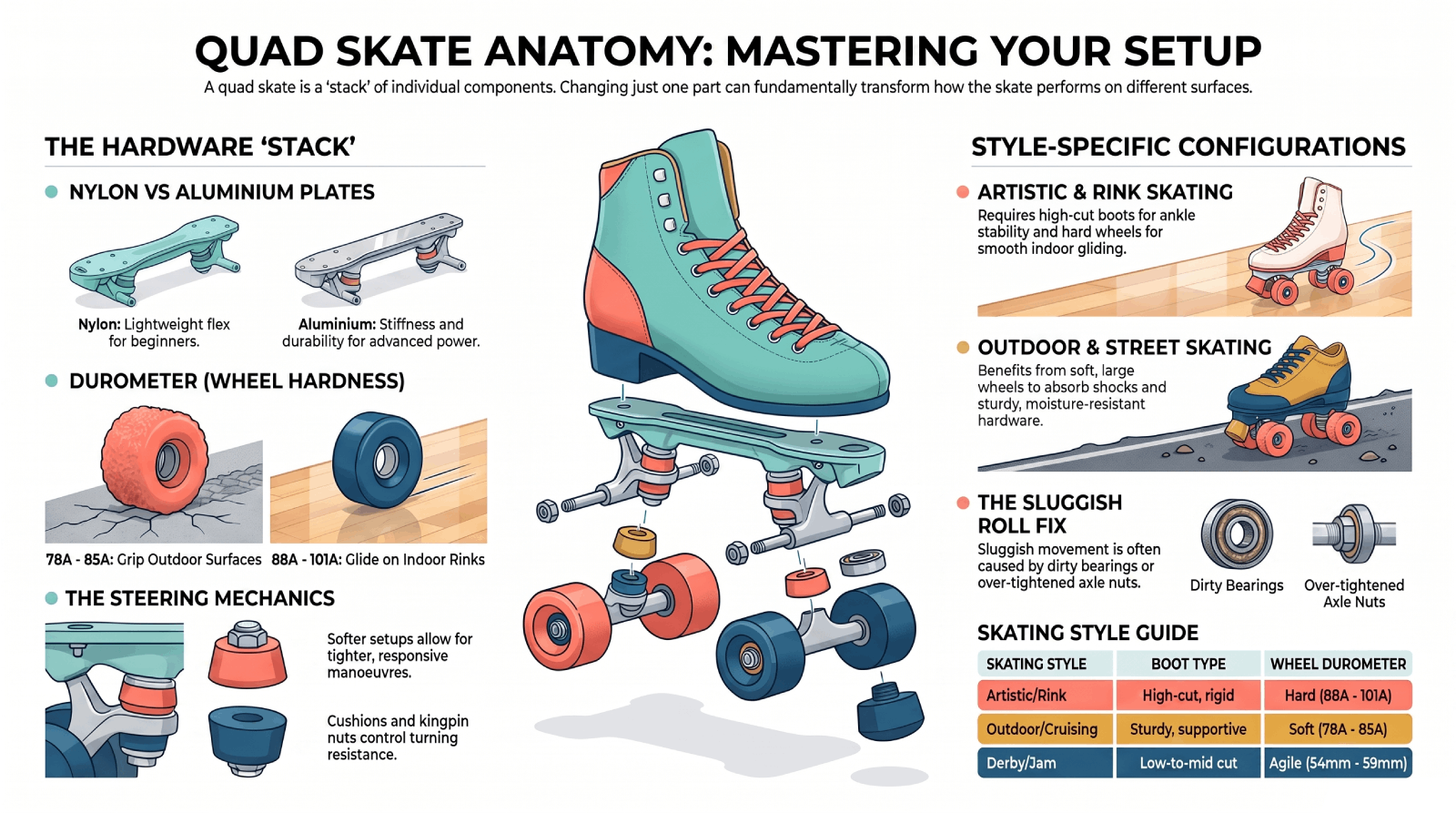
Putting It All Together: Recommendations by Style
Beginner, indoor rink A supportive high-cut boot (Rookie or Impala) with a soft, well-padded liner for comfort while you find your feet, nylon plate, standard kingpin angle, medium-soft cushions, 58–62mm wheels in a harder 90A+ durometer, steel bearings, standard hardware, and a large flat toe stop for confident, stable braking.
Beginner, outdoor/pavement A slightly sturdier boot (Rio Roller or SFR) with a thicker, more protective liner, nylon or entry aluminium plate, shallower kingpin angle for stability, harder cushions, larger 62–65mm wheels in a soft 78–85A durometer to absorb rough ground, steel bearings, rust-resistant hardware to handle damp outdoor conditions, and a large flat stop.
Artistic/rink skating High-cut, rigid boot, thinner and more responsive liner for precise footwork, aluminium plate, steeper kingpin angle for tight turns, soft-to-medium barrel cushions, 57–59mm wheels in a flat profile and hard durometer (Sonar indoor range), precision bearings, snug hardware kept regularly checked, and a smaller round toe stop for clean footwork.
Derby/jam skating Low-to-mid cut, rigid boot (Moxi, Antik, Chaya, Riedell) with a durable, close-fitting liner, aluminium plate, adjustable/reversible trucks so you can tune the angle, cone or barrel cushions to taste, 54–59mm wheels in a rounder profile (Radar Halo), ceramic or high-ABEC bearings for quick acceleration, a spare hardware kit on hand for match day, and a low-profile toe stop or jam plug.
Street/park skating Lower, more flexible boot with reinforced toe protection and a thick, heat-mouldable liner to handle impact, durable aluminium plate, stable kingpin angle, firmer cushions for control on ramps, harder 88A+ wheels that hold up to concrete, high-tensile hardware that can take repeated knocks, and durable rubber or polyurethane toe stops built to absorb impact.
You don't need to overhaul every part of your skate at once. If something feels off, work through the stack logically: sluggish roll usually points to bearings, twitchy or unresponsive turning points to cushions or kingpin angle, discomfort almost always traces back to the boot or liner, and anything rattling or working loose points to your axle and hardware. Understanding what each part does means every upgrade you make is a deliberate one — not a guess.
Browse the full range of boots, liners, plates, trucks, wheels, bearings, hardware and toe stops at Skatehut to build or upgrade a setup that matches exactly how and where you skate.